The Realistic Optimist

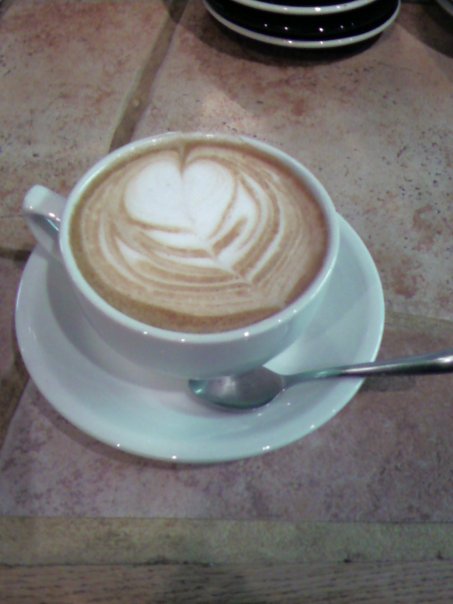
She sat down at the table and     automatically lifted the mug of coffee towards her face, analyzed it, then sniffed it.

“I’m sure it’s fine,” he said with a snicker.  “Why do you always think it’s going to be wrong?”

She took off her hoodie and draped it over the chair behind her.  “Because they rarely, if ever, get it  exactly how I order it.”

“So negative for an optimist!”

“Let’s just say I’m a realistic optimist and leave it at that.”  She stirred the coffee and took another sniff.  “I think there’s too much cinnamon.”

He laughed.  “No such thing.”

“As too much cinnamon?” she asked with a smile.

“No, jerk.  As a realistic optimist.”

“Sure there is.”

“Optimists are dreamers by nature.  A person claiming to be a realistic optimist is just an undercover pessimist, trying to figure out why optimists are so optimistic, what makes them tick, why they think there will be a happy ending regardless of how things are in the present.”

“Nah,” she said, swatting his idea away from the table.  “I’m a dreamer who hopes for the best, but prepares for the worst.”

“An optimist wouldn’t prepare for the worst.  He or she would just know that either the best will happen, or they will take something from the bad event, no matter what it is, that will make them a better person.”

She sighed and took a sip.  “Hmmm…I was right, too much cinnamon, not enough milk.”  She put it down and pushed it away from her and towards him.

He reached over and grabbed the cup, walked to the self-serve table, and added some milk.  He sipped it, added a little more, and returned.

“It still has too much cinnamon, I’ll bet you,” she said.  He handed it to her and she sipped it, said nothing, and put it down, this time on the table right in front of her.  He smiled.

Photograph and some dialogue by Jessica Brookins.

Dreams From Italy

I dreamt of Italy last night.

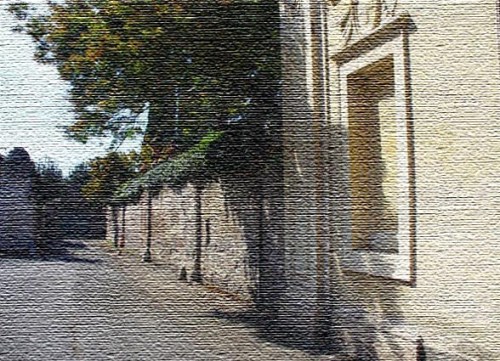
I was there on a family vacation, but somehow spending a day alone.  I ended up lost in a small town, alone, wandering and trying to figure out how I’d gone so far off the beaten trail.

And that was when I met her, this beautiful woman in a magical world, and she walked right up to me as if she’d known me forever.

“You’re the one I am supposed to marry,” she said, in very good English, considering.

“I am?”

“Yes, you are.  I have dreamt of you every night since I was a young girl.  Everything I did led me to this moment, to you.  I have been waiting here a long time for you.”

I looked at her in disbelief, looked around to see if I was being mugged by gypsies, but when I returned my gaze to her she took my face between her hands and forced me to look into her wide, beautiful brown eyes, and I saw an innocence in them that told me she was telling the truth.

I had finally found her.

She took my hand and led me to a huge festival, a carnival-like atmosphere where the town seemed to be celebrating something.  She brought me through crowds, so many of the elders smiling at us, as she locked her arm into mine, as if they also knew I would someday arrive and marry her.  Young girls followed behind us, giggling and pointing us out to others, who also started to follow, as she brought me to a large table with about thirty people seated.  She said something in Italian I couldn’t understand, and everyone stopped talking and looked up at me.  They looked serious at first, and then slowly smiles took over their faces, and the men started jumping out of their seats and running to me, clapping me on the back.  Older women hugged me and kissed my cheeks, and eventually I found myself separated from my new love, surrounded by her family.

And elderly woman, wrinkles that seemed older than me covering her face, hobbled up.  She was so thin a hug would break her, and she beckoned me closer; I had to bend down to hear her, and even then someone had to translate for me.  She spoke slowly and deliberately, as if this would be her last speech.  A younger boy translated for me.

“It is custom for a new man to find his woman.  She has run off.  You must find her if you wish to marry her.”

“Why?” I asked.

The boy translated for me, and the old woman frowned and responded.

“It is our town’s custom and it has been this way for hundreds of years.  That is why,” he told me.

And so I left and wandered around the carnival for a while, suddenly compelled to leave it and wander a dark road.  I’m not sure what drove me in the direction I chose, whether it was confusion or the love I found for this new woman leading me to her.  I stayed on the road for a bit and when I saw a bus stopped in front of a large, ancient church, I turned towards the building to look around.  It was full of people who traveled a long way just to see this place, and as I walked towards it I stepped through many small, glass jars that littered the ground.  I looked down to find the grass, the path, and all of the land covered with little jars and lids.

I bent down and picked one up, examining the substance that once filled it.  I could tell it was some sort of jelly or preserve, and I stuck my finger in and took out a tiny bit of it, tasting it.  It was delicious.  I placed this jar back on the ground and started towards the building, seeing a line of people waiting to get in.

As I approached the line, an Italian who seemed in charge beckoned me towards the front as if he knew me, and waved me in past everyone.  Nobody gave me dirty looks, they smiled and clapped me on the back as I went ahead of them.  Inside, it was an old church, hundreds of years old, and every open shelf or window was also covered in the little jars emptied of their goodies.

As I continued on I saw a shelf, low to the ground, jars piled on it, but this time they were unopened.  I took one, and a little boy nearby walked up to me and started handing me more.  “Free,” he said, although I’m not really sure he understood what he was saying.  I took a few more and put them in my pockets, and then continued on.

The darkness of the hallway slowly disappeared as I continued towards a lit up opening, which led to a courtyard.  My eyes took a moment to adjust to the sudden brightness as I noticed a woman facing away from me in the middle of the courtyard surrounded by children.  They all began to giggle as I approached, and when I touched her shoulder she turned and I saw those large innocent eyes once again, and she smiled.

“You found me.  You’ve passed the first custom.”  She looked at me with such love that I felt my heart swoon, and I realized that I, too, was in love with her.  I took her hand and kissed it, and the children circled around her and pulled her away from me.

“There is still another custom,” she said, smiling and reaching for me as they pulled her away.

The children all giggled as the girls pushed her towards one archway and the boys began pushing me towards another.  I found myself surrounded by many men of all ages in a separate courtyard.  They smiled at me and continuously congratulated me on finding her, and then they boy from earlier approached.

“Next, you must say to her the traditional words, but you must memory them.”

“Do you mean memorize?”

“You know, you must say them without help.”

“But I’m not from here, I don’t know the words.”

The boy translated to the men and all grew concerned, brows furrowed as they discussed what must be done.  After much talk, the boy came back to my side.

“If you do not know the words, you cannot marry her.  We are taught as young children.  We know them.  We get a little card and we learn it and then we return the card to our parents.  Then on our wedding day, after we recite them, we get the card back, and it signifies our love.”

I sat down, disheartened that I would come so close to the love of my life and fail now.  A man even older than the old woman who first explained the custom to me came up and looked me in the eye.  Even seated I was taller than him, gravity and age had stooped him so much.  He put a hand on my shoulder and spoke.  He was speaking in Italian, but I knew he was telling me about his love, and how long they’d been together, and how perfect his wife was.  I could sense his story as he told it, and at the end he reached into his pocket and pulled out a wrinkled scrap of paper with the image of a saint on it, and he handed it to me.

I flipped it over and there were words on it, and I knew they were the words I would have to say.  The men folk of the town all began to whisper to each other, but remained quiet as I read it over and over again, hoping I could remember it.  Then, the whispering stopped, and I looked up to find the old woman again, leading my love into the courtyard, only now she was wearing a beautiful full dress, her hair was down, and she seemed to glow like an angel.

She walked up to me and smiled, and I said the words.  She leaned in and kissed me, and whispered, “You did it perfect.  I love you.”

At this point, my alarm went off and woke me up.  As I rose from bed, my memory of her faded a bit.

As I ate breakfast, I could remember some of the words I’d said.  As I dressed for work, I could remember less of them, but I still remembered the jars of preserve, and the taste.  As I drove to work, all I could remember were her beautiful eyes and the feeling I had when I realized I loved her.  By the time I got to work, the memory had faded, but I still loved her a tiny bit.  And now, I cannot even remember the look in her large, innocent brown eyes.

Original Photo by Charleen Artese  http://www.flickr.com/this_is_she

He Says Oui

Julie and Quinn watched the couples walk by at a pace slower than what they were accustomed to in the United States. Their breath clouding the air in front of them, they admired the beautiful view, a simple rue full of little shops like every other street they’d seen in Old City, Quebec.

“I wish we could live here year round.”

“And I don’t? That would be lovely.”

She pulled a mittened hand out of her pocket and picked his up, holding it tight. He squeezed back and she looked into his eyes. A couple passed and she returned to people watching.

Lovers walked by closer than they would walk back home, and Quinn squeezed her hand a little harder and a smile grew on her face. She rested her head on his shoulder for a moment and closed her eyes.

That’s when a distant ruckus startled her a bit, and she was not the only one. The meandering couple who moments before were full of bliss jumped a bit too and hurried away from the little courtyard-like road. The noises approached from around a corner.

“Here they come again, merde!” Julie whispered.

“Jul, they are so obnoxious. I can’t take it anymore.”

A large group of people, their loud laughs echoing against the stony storefronts, began to emerge from around the corner, headed by a rather large woman with a giant American flag t-shirt and armed with a disposable camera. She screamed at the sight of the fountain calmly pushing water into little waterfalls.

“Be positive,” Quinn whispered into her ear.

“I’m trying. It’s tough.”

“Look at the cute older couple sitting over there.”

She followed his finger towards the same fountain, where a couple, probably in their seventies, were sitting close to each other and preparing lunch. The man pulled out a sandwich and unwrapped it making sure the paper came off just right, handing the woman her half, and waited to start eating until she was settled. Meanwhile, she opened a bottle of Perrier and placed it next to her. She took her half of the sandwich; they looked at each other, and began eating. That’s when the American woman ran up to them.

“Hel-lo,” she yelled as if the elderly couple was both deaf and unintelligent. “I. Would. Like. To. Take. A. Picture.” She held up her disposable camera and pretended to take a picture. “Could. You. Please. Move.” Then she began to back up, ready to take the picture. The couple looked at each other and then, with a sad sigh, began collecting their little picnic. The loud American grunted.

“Take your time, geez. I just wanna take the friggin’ picture!”

She rushed them, shooing them away like unwanted children at a dinner party, and then tried to take the photograph multiple times until she realized the camera must be advanced.

“Ugh. It’s so embarrassing that we’re with them,” Julie said.

“Agreed.”

“But what are we supposed to do? Quit the tour now? We spent so much money.”

Oui.”

At the sound of Quinn’s simple attempt at French, Julie smiled. She loved that he was trying, because she knew it was just to impress her. She loved the one or two words he was comfortable saying, such as this one and the other common expression, “Merci.”

He also smiled, because he knew she was impressed. She had taught him other words on the plane as they took off, but those were the ones he was comfortable saying, for now. He would try harder.

The large group of Americans filed into the nearby stores, most of them purveyors of Canadian flags, t-shirts and hockey jerseys.

“I’m dying of thirst.”

Moi aussi. Let’s get a Perrier. I’ve always wanted to try one.”

Quinn got up from the curb and offered her his hand, and she took it and allowed herself to be pulled towards a store.

Merci,” she said with a cute smile.

They walked up to the nearest store with a visible refrigerator and entered.

“Mom! MOOOOOM!” a woman in the back of the store screamed into a cell phone. “They have all kinds of shirts! They have blue! BLUE!”

Julie looked at Quinn who was already rolling his eyes.

“This is so embarrassing,” she whispered. “No wonder the world hates Americans.”

The woman continued her phone call as if she were yelling to her mom from two hundred miles away. “MOM! THEY ALSO HAVE A RED ONE WITH A CANADIAN FLAG! OH AND A GREEN ONE WITH A MOOSE! OH AND MUGS! THEY HAVE TONS OF THEM!”

Quinn ran to the drinks and grabbed a Perrier as Julie pulled out a toonie, almost as if they had rehearsed this before. The little bell hanging over the door rang in no time and they were back on the curb. They opened the Perrier and took a sip.

“It’s okay.”

Oui,” he agreed. “It’s kinda just like club soda. But the moment is so great, I can’t help but love it. Just look at this place. It’s beautiful.” He looked around and his eyes ended on her. “You’re beautiful. How do you say beautiful?”

Beaux.”

“You’re beaux.”

Merci!”

They stared into each other’s eyes and then heard footsteps, so they returned to their people watching. Another couple wandered onto the street: a boy in a longer pea coat with large buttons, and a girl in a similar coat but red. They both wore white scarves and walked in unison. At first this was confusing, until they looked closer.

“Were they sharing headphones?” asked Quinn.

Oui, Je pense ainsi, I think so.”

“That is adorable. I love this place. The couples seem so loving, the streets are so clean, it’s safe and beautiful everywhere. The only really ugly thing is the…”

His voice was drowned out by two loud Texans who exploded out of a nearby restaurant.

“I can’ beleev that stuff we jus ate, the damn es-car-got,” he yelled, spelling the word out, as if his wife were deaf. “What the hell is up wit these damn frogs? Eatin shit that I wouldn’t use as bait! And what the HELL is a loonie? Sounds like a damn cartoon!”

The end of his sentence echoed down the street a little, and the pea coat couple turned around for a second, recognized the situation, and then continued on shaking their heads.

“Maw, let’s get one of those damn Canadian flags to burn at the pig roast next week! Ain’t never had a pig cooked over a fire without some flag from a stupid-ass country! Whatta ya think?”

“Sure thang, Walter. Les do it!”

They entered a store, where their voices could be heard even once the door was shut.

Jul took Quinn’s hand and he squeezed.

“When we finally get to Paris, we’re going alone,” Julie said.

Oui.”

The Letter

She always dreaded that the day would come.  He had been serving in the army for a second tour of duty, and she would often have nightmares of that fateful moment.  The men would come, dressed in their uniforms, and solemnly approach her home with that letter, the typed, impersonal apology from the United States government.

It had happened to Ethyl down the street, and she spent days there, consoling her, bringing casserole after casserole, returning home with the emptied dish every night with the knowledge that she would just have to fill it up again tomorrow, a shared sympathy.  After all, it could just as easily be Ethyl bringing the casseroles to her.

And then one evening, she was sitting watching the television when she heard a car coming down the street and just knew.  She got up, still dressed from her long day of shopping with Ethyl, attempting to keep her mind off of her loss, and she could see the car slowly driving down the street.  She watched from the window, lights off, praying that the car would just pass her house.

It pulled into her driveway, a long, black Buick, and the headlights illumined the space around her, through the window.  For some reason she grabbed her purse, an afterthought, or perhaps something to hold onto when the news came.  She watched as two older men in uniform got out of the car and straightened their shirts, double-checking for perfection.  Then one reached into his pocket and withdrew the envelope.

For a brief moment, she felt a breath on the back of her neck, and she turned and saw her husband there.  The men approached her stoop.

She reached out to touch him, and he smiled, just for a moment.  The men were at the door now.

His smile disappeared, and he nodded knowingly, reassuringly, and she knew what he was trying to tell her.  The men knocked.

She looked down at the carpet, freshly vacuumed, felt the gentle caress of his hand at the small of her back, and when she looked up he was gone.

The Wish of the Wooden Man (A Flash Fiction Fantasy)

I sat at my art desk drawing a wooden model man.  I had him posed as if he were frozen, mid-air, while skipping down the road.  One arm flailed towards the heavens, the other reached out as if it would make him land an inch farther, both of his legs stretched as if jumping a hurdle.

That’s when I heard the voice.  “Why?”  It was calm, quiet, mysterious and yet manly.  Almost whispered, with a childlike tone.

I looked around, confused.

“All I want is to be positioned naturally, just once.”

I strained my ears, listening for the source.  It sounded as if it were right in front of me, coming from the wooden man, and yet, it also seemed to come from deep inside of me as well.

“What do you mean?”  I asked, prying more words so as to detect the source.

“You always position me in unnatural poses.  Jumping, dancing, walking, but never how a real person would jump, dance or walk.  Always different from a human.”

It was definitely coming from the wooden man.

“It’s the part you play, my friend,” I said to him, turning the invisible face towards me so I could see if there were any visible changes.

“I just want to look human.  I’m supposed to represent one.  Why make me stand so many ways, and yet none of them make me feel more like you?”

“So what, I should sit you on the couch in front of the tv?  Should I put you to sleep at night, under the covers?”

“You’re mocking me.  All I want is to be like you.  And you mock me.”

I turned him away from me a bit.

“I guess I never thought of you as a sentient being before.  How was I to know this was what you wanted?”

“You should have known.  You should have guessed.”

“Well, I apologize.  How would you like to be posed?  Your wish is granted.  Tell me.”

The wooden statue failed to respond, trying to decide, I assumed.  I picked him up so he knew I was serious.  Finally he responded.

“Sitting in a chair.  That’s what I would like.”

“Should I put you on an actual chair, or just position you as if you were sitting on one.”

“Those chairs are much too big for me.  So I guess just a pretend chair.”

I picked him up and bent his legs, his back, his arms, and granted his wish.

A Swingset Romance

She pumped her legs back, then forth, then back again.  So did he.

“Race you to the top!”

“Don’t you mean let’s see who swings highest?”

He laughed.  Always so logical.

He slowed down on purpose, she stretched her legs as far as they would go.

“I win!”

He smiled and started dragging his feet, and she followed suit.

At a standstill.

“It’s really cold tonight.”

“I can see my breath.”

She pretended to draw on an imaginary cigarette, blew out, and laughed out more.

He started coughing, waving imaginary smoke from his face.

“Secondhand smoke kills.  Thanks for that.”

“Oh please, you lost the last few minutes of life when you’re old and dying and it’s at its worst.”

He stopped smiling.

“But my last few minutes will be with you, saying goodbye to you.  Do you really want to lose that?”

Her smile melted away as well.

“Well, no.”

“Then take it back.”

She thought about it, leaned back on the swing, holding onto the chain and letting her hair almost reach the dirt underneath.  When she pulled herself up, she was smiling again.

“Fine. “

She started pumping her legs again frantically, picking up speed.

“Best two out of three?”

Artwork by Matilda, http://matilda.dreamwidth.org/

The Lamentable Charles W. Berkhouse (A Story of Fiction)

This is the story of Charles W. Berkhouse.  If you’re looking for a happy tale, one that will make you smile at the end with a fortunate feeling in your heart, you’re in the wrong place.  This is the tragic story of a man’s miserable life, one in which the tragedy starts from the day he was born.

An orphan left on the steps of a nunnery, newborn Charles was found one fall morning wrapped in a blanket with a note pinned to the his diaper, two simple words scribbled messily “Unwanted child” on the back of a coupon for five cents off steak.  The nuns sent him to their orphanage, a bare-walled, refurbished insane asylum rented out by the church for such events.  It was fourteen years before an unwanted Charles would use a different return address, when he would leave the orphanage and get a job in an up-and-coming five and dime store in the city.

Years would pass, small promotions would come, leading him to his career as an underpaid traveling salesman for the same company he’d worked for his whole life.

As an adult, Charles eventually had it all, a wife, a child on the way, a good job, car, house with the white picket fence, everything a man in the 1940s could possibly want.  Until that fateful day when Eunice, his wife, went into labor a few weeks earlier than expected.

They lost the baby; she would have been a beautiful little girl.  They’d prematurely named her Elizabeth if she was a girl, Robert if he was a boy, Betty or Bobby.  But little Betty never had even a minute outside of the womb.  Eunice was devastated.

It wasn’t even two months later that Eunice was hit by a car, driven by another traveling salesman, a competitor of Charles.  The driver was quoted in the daily paper as saying, “I was driving my route, I sell car brakes you know, best in the business, and I don’t even know where she came from.  One minute the road was clear, the next…”

Charles was devastated.  His life insurance company wanted to investigate the accident before they paid out, but Charles quickly told them to forget about it.  He sold the house and poured himself into his job, staying in fleabag motels and dirty boarding homes on the road, never looking back.  He carried his few belongings in a small suitcase he’d bought at a garage sale, which proclaimed visits to Paris, Madrid, Rome and a few other exotic places, none of which Charles would ever see for himself.  All he would know were the small dying towns on his sales route, places long forgotten as time passed.

Every year, at some point, his route would bring him back to Middletown, New York, where both Eunice and Betty were buried.  He would stop by a florists, pick up some cheap flowers, after all, his route wasn’t what it used to be, and stop by for a quiet visit.  He wouldn’t speak or cry, he would just stand for exactly five minutes, timing it on his watch, and then move on towards his next appointment.

It wasn’t until his fifth visit that he first saw the dog, a golden blur shooting by in the corner of his eye.  He spun, looking for it, and finally saw it standing directly behind a nearby tombstone.  It panted and walked up to him slowly, trying to get Charles to pet him.  Charles, being an orphan, never had a pet, even when Eunice begged him repeatedly for a cat every time a holiday came around.  He just didn’t see the point.

And so, he reacted the way he always did when a pet wanted attention from him.  He turned and walked away.  After all, his five minutes were up, and he had to meet Mr. Moskewitz in fifteen minutes.

The next year, once again he found the dog there, begging for attention, and again Charles shunned the poor beast, leaving it whining behind him.  As he left, he saw the caretaker and felt a need to complain.

“Sir, I find it extremely distracting and inappropriate that you allow your dog to just run around willy-nilly like that.  This is a serious, somber place.  Not somewhere for a dog to playfully run around and, ahem, do his business one can only assume.”  The caretaker looked at him curiously.

“We don’t got no dogs here, buddy.  Not allowed on the premises.  Don’t know what you’re talking about.”

A year later, Charles once again found the dog near the grave, and once again ignored it.  But this time the dog walked up and started nuzzling his shin, and he kept trying to shoo it away with no luck.  Finally, he decided to look at the tag.  It had one simple letter in quotes, “E”.  He frowned and turned it over, looking for an address, but there wasn’t one.  The dog followed him out, only to get him a scolding from the caretaker, who reminded him that no dogs were allowed in the graveyard.

The following year, he expected to find the dog again, and was not disappointed when, as he approached the gravesite with his yearly small bouquet, the dog, E, once again jumped out from behind a nearby tree.  Charles walked up to it, let it sniff his hand and tried to pet it, at which E backed away from him.  He reached into his pocket and pulled out a dog bone he’d bought and tried feeding it to E, who just backed away more.  He left the treat on a small tombstone and went to his meeting with Mr. Meinheim.

Another year passed, and this time he was prepared with a leash, ready to capture this animal that was surely destined to be his companion in life.  He imagined the dog going on his route with him, visiting parks and fields, playing catch, having strangers take their photograph in each town, and even though he was awkward with animals, he liked the sound of it.  It was surely a sign that the dog was there every year, and that the caretaker didn’t recognize him as a common occurrence.  As Charles walked towards the spot excitedly, playing with the end of the leash in his pocket, he realized he’d forgotten the flowers.  He walked up and started looking for E, only to realize that the dog was nowhere to be found.

Christmas Memories (My First Nonfiction Post)

It’s Christmas, 1982, ’83, ’84, ’85, pick a year, any year.

Santa came and went, church is finally taken care of, the celebration with my mom’s side of the family is over, and we are now at my Pop-pop’s house, anxiously awaiting presents from Aunt Mary and Uncle Mike, two notorious over-spenders when it comes to us and holidays.

“Looks like Santa left something here for Dennis,” my Pop-pop would say.  “I wonder why he would leave it here.”   The first year, and possibly the second, it was pretty new and exciting.  After that, it became as predictable as the end of Mickey’s Christmas Carol, which was another part of our annual Christmas tradition.  But the first year, it was exciting to hear.  I could not help but think of how envious my sisters must have been.  I mean, come on, Santa had given me an extra present.

Pop-pop handed over the gift, and I looked at my parents with excitement.  I tore it open and lifted the lid to find…potatoes.

“Uh oh.  Looks like someone was bad this year!  Santa brought you potatoes!” my grandfather said.

That first year I was confused as hell.  Why would Santa bring me all those presents at home only to leave me something odd like potatoes at my grandparents’ house?  And if I knew anything about Christmas from all the movies and television specials, it was that bad kids got coal, not potatoes!  That was when I realized Pop-pop was laughing, and it was contagious.  Everyone started laughing.  And then I got it.  I was the victim of one of my Pop-pop’s pranks.  And I loved it.

So it became a part of Christmas.  Every year, I got potatoes.  And for some reason, even though we all expected it, every year we all laughed and laughed.  But the thing was, I did not even get to keep the potatoes.  He would say that they were his lunch for tomorrow.

Snow Days (A Story of Fiction)

Found photograph from a yard sale.

We were out so long that our socks were soaked in the cold, icy water that had once been snow.  It snuck into our boots through tiny holes in our armor, somehow penetrating the elastic of our waterproof pants, our solar gloves that warmed our hands the longer we were out there, our fleece inner linings, even my polarized sunglasses seemed to be wet straight through.  I grabbed my coveted sled, the IceBreaker 3000 and told Madison it was time to go home.  She agreed.

As we walked home, lightweight titanium sleds folded up and placed on our backs, and the sun set, the world still glowed a whitish-blue and lights from houses and porch lights stood out in a yellowish tint, unless of course they were energy-savers, pronounced by a bluish-white.  As we approached home we could see our Mommom sitting in the bay window in her favorite chair, drinking tea.

We walked in the front door and began unloading our clothing, and after a quick shedding of layers we finally entered the living room where she sat.

“Have fun, kids?”

“Uh huh,” we answered in unison.

“Come on, I have some hot chocolate for you.”

“Is it low fat?” my little sister asked.

“Of course.”

“I like mine with soy milk,” I said.

“Of course,” she responded.

We ran over and picked up our respective glasses, and she leaned forward long enough for us to grab the fleece blanket that rested on the chair behind her, to snuggle up.

“Boy how things have changed,” she said, looking up at me and removing the sunglasses from my head, placing them on a nearby table.

Madison was the first to take the bait.  “How, Mommom Betty?”

She looked out, mesmerized by the slowly falling flakes, and smiled.

It was 1923, and the first snow day we’d had in years.  I waited impatiently for mom to finish cleaning the kitchen so she could approve of my snow clothing.  Finally she came in, drying her hands on her apron.

“Okay let’s see how you’ve done,” she said with a warm smile.

I stood at attention, ready for inspection.

“No, no, no Betty.  This is no good. Come on.”

She took me upstairs to the attic, pulled open the large, seldom-used bottom drawer and started rooting through it.  She pulled out pair after pair of long johns, and put them into a pile in front of me.  Finally, after four pairs of pants and two shirts she stopped.

“Okay get those snow pants off and put these on.”

“All of them?”

“Yes.  Do that while I go look for more shirts.”

I sighed and started taking off the pants, putting on pair after pair until I felt like I was twice my original size.  I ran down to her, looking around in other drawers in her room, anxious to go out and play.

Finally, mom gave up.  “I guess that’ll have to do.  Here are gloves and a hat.  Let me help you get those snow pants back on.”

I was struggling trying to put them on over the several pairs of long johns, unsuccessfully.  The pants just wouldn’t fit.

“Stand up,” mother said, smiling.  She held onto the pants as I jumped up and down, shoving my way into them.  “Okay that should do it.  Let’s get that coat on.  And next the gloves, okay hat, and now let’s put on your hood.”

I hated the hood.  I frowned at her.

“Frown all you want, young lady, I will not have you catching your death of cold out there.  That’s how people get sick.”

She tied the hood tight, too tight, and double-knotted it so I couldn’t possibly untie it, especially considering my mittens.

“Okay now for the socks,” she said handing me two more pairs of thick, heavy socks my great-grandmother had sent me. “Now boots!” as she shoved them on over the socks.  I was finally ready.

“Okay now go have fun.”

I ran outside to the garage, where dad had left my wooden sled for me against the big wooden door.  It was hard and tiring to walk with all of those layers, but well worth it.  Soon I would be sledding with my friends at the park.  I put the sled down into the snow, the metal rails scratching against the driveway underneath the snow a bit where father had shoveled.  I tried three times before successfully clutching the frayed twine that acted as a rope handle for it, finally grabbing it between the small and giant finger my mittens changed my hand into, and I was ready.

There was nothing like that moment walking to the playground as I could see small heads popping up at the top of the hill, then disappearing down into a snowy pit, screaming in happiness all the way down.  I could hear the fun from a block away, before I could even see it, and as I got closer I walked faster, anticipating the fun.

I made it.  I walked to the top of the hill, and saw all of my friends, unrecognizable in all those layers of clothing, at the bottom, waving me down.  They were making snow angels.  I brought my sled to the edge, sat down, grabbed the wooden handles that let me steer, and slowly pushed myself off of the top of the hill.

After a little over an hour, I knew I had to head home, and started the sad walk back.  Mother wouldn’t want me gone much longer, and certainly would be cross with me if I missed lunch.

I got home, placed the sled right where father had left it, and went to the back door, where I knew I had to go to take off layer upon layer of snowy, wet clothing.

And when I finally finished, mother had a hot chocolate sitting at the table, a real one made from milk and melted chocolate, and I sipped it, feeling the warmth flow through my shivering body.

At this point, she had fallen asleep, and I sipped my soy hot chocolate, finally warming up, and I, too felt that warmth from the drink.  As I got up to play Rock Band with Madison, I noticed something Mommom’s hand, and reached out, carefully taking it.

It was a photo, wrinkled and black and white, of my Mommom all bundled up, pulling her sled in front of our house.  She looked a lot like Madison.

A Moment After a Long Day

They sat on a bench, people watching, blocks from the hotel, exhausted from the steps at Sacre Coeur.  It had been a long, beautiful day in Paris, culminating to this moment, when he glanced to the left and noticed the Eiffel Tower. His first view of it at night.  He nudged her, pointed, and she smiled and sighed a sound of pure contentment.  He snapped a photograph, trying to capture the feeling of that moment forever.

He was in Paris.